
If your car sits unused for days—or even weeks—you may be surprised to find it won’t start when you finally need it. A dead battery is one of the most common roadside issues, especially during cold weather or long idle periods.
The good news? With the right habits, you can keep your car battery charged even when your vehicle isn’t being driven regularly. In this guide, we’ll explain why batteries drain, how to prevent it, and what to do if your battery still dies.
Even when your car isn’t running, the battery is still powering:
Alarm systems
Clock and infotainment memory
Keyless entry systems
Onboard computers
Over time, this slow drain—combined with cold temperatures—can leave your battery too weak to start the engine.
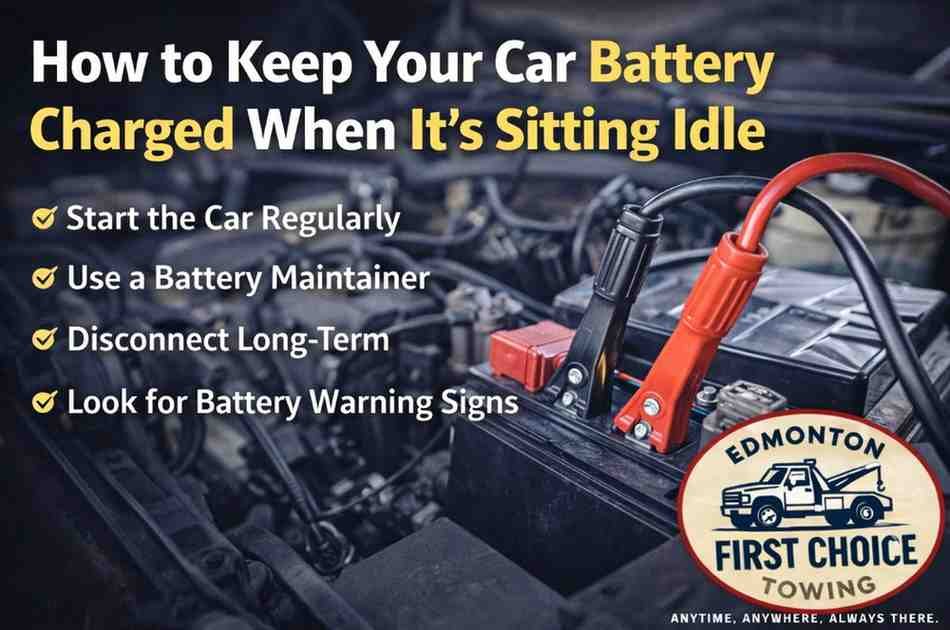
Starting your vehicle once every 5–7 days helps recharge the battery—but only if you let it run long enough.
Best practice:
Run the engine for at least 15–20 minutes
Better yet, take a short drive instead of idling
Short engine starts without enough runtime can actually drain the battery more than they recharge it.
If your car will be parked for more than two weeks, a battery maintainer is one of the best solutions.
Benefits include:
Keeps battery at optimal charge
Prevents overcharging
Extends battery lifespan
This is especially useful for:
Second vehicles
Seasonal cars
Work trucks parked long-term
If your vehicle won’t be used for a month or more, disconnecting the negative terminal can stop parasitic drain entirely.
⚠️ Keep in mind:
You may lose radio presets and clock settings
Some newer vehicles require system resets
If you’re unsure, consult your vehicle manual or a professional.
Cold weather is brutal on car batteries. Parking indoors—even in an unheated garage—can significantly slow battery discharge.
In Edmonton winters, this single step can make the difference between a smooth start and a dead battery.
Chargers, dash cams, and aftermarket electronics can continue drawing power even when the car is off.
Before leaving your vehicle idle:
Unplug phone chargers
Turn off dash cams
Check interior lights
Small drains add up over time.
If your battery is 3–5 years old, it may not hold a charge well—even if you follow all best practices.
Warning signs include:
Slow engine cranking
Flickering dashboard lights
Battery dying after short idle periods
At this stage, prevention may not be enough.
Even with proper care, batteries can fail unexpectedly—especially in cold climates.
If your car won’t start, professional help is often the fastest and safest solution.
👉 Battery Boost Service in Edmonton
First Choice Towing provides fast, safe, and reliable battery boosting—anytime, anywhere.
Battery boost pricing depends on:
Location
Vehicle type
Time of day
For a clear breakdown, read:👉 How much does it cost to boost a battery?
💡 Tip: A quick boost can save you from needing a full tow.
Keeping your car battery charged while your vehicle sits idle comes down to simple habits and smart preparation. Regular starts, battery maintainers, and cold-weather precautions can go a long way—but when a battery still fails, fast help matters.
If you’re ever stuck with a dead battery in Edmonton, First Choice Towing is ready 24/7 to get you back on the road.
Save this guide—and you’ll never be caught off guard by a dead battery again.